
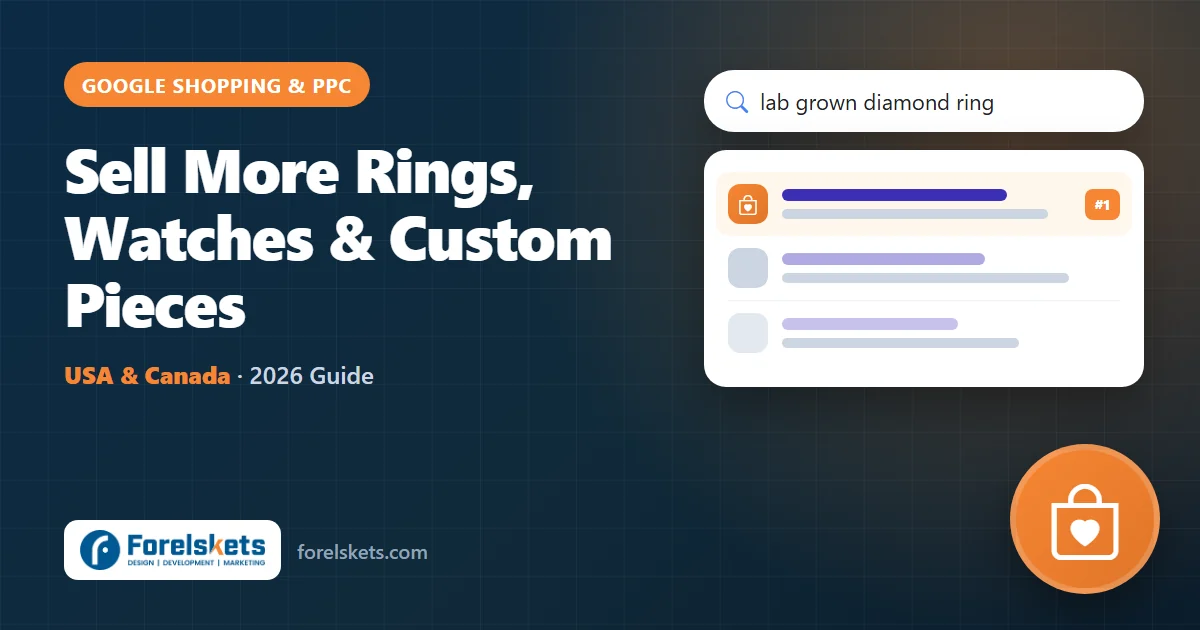
Jewelry is one of the most visual, comparison-heavy purchases people make online. Shoppers want to see the ring, the price and the store before they click — which is exactly what Google Shopping ads show. Combined with well-built Search campaigns, PPC can bring both online orders and showroom appointments within days.
The PPC toolkit for jewelers
| Campaign type | Best for |
|---|---|
| Search | High-intent services and categories: “custom engagement rings”, “jewelry repair near me”, “lab grown diamond store”. |
| Shopping | Individual products with image and price — rings, bands, pendants, watches. |
| Performance Max | Reaching shoppers across Search, Shopping, YouTube, Display and Maps from one campaign, fed by your product catalogue. |
| Local inventory ads | Showing nearby shoppers what is available in your physical store. |
| Remarketing | Bringing back visitors who viewed products but didn’t buy — important for long consideration cycles. |
Step 1: Get your product feed right
Shopping and Performance Max are only as good as your Google Merchant Center feed. Each product should have:
- A descriptive title: “14K White Gold 1 ct Lab-Grown Diamond Solitaire Engagement Ring” beats “Ring #4471”.
- Accurate price, availability and sale price.
- Attributes like material, colour, gender and size where relevant.
- Clean, high-resolution images on a plain background, without promotional text overlays.
- Correct product category and GTIN/brand data for branded items.
Tip: most Shopify and WooCommerce stores can sync products to Merchant Center automatically — but default titles are often too short. Optimising titles is one of the fastest wins in jewelry PPC.
Step 2: Search campaigns for high-intent searches
Not everything is a product search. People also search for services and store types. Build Search campaigns for:
- Engagement & bridal: “engagement ring store [city]”, “custom engagement ring designer”
- Custom work: “custom jewelry near me”, “redesign my old jewelry”
- Repairs: “ring resizing”, “jewelry repair”, “watch repair near me”
- Brand terms: your store name and the designer brands you are authorised to sell (within brand policies)
Add negatives such as “DIY”, “wholesale supplies”, “jobs”, “course” and “fake” to avoid wasted spend.
Step 3: Plan for seasonality
Jewelry demand is seasonal. Build a calendar and prepare creatives and budgets ahead of each peak:
- Holiday season (November–December) — gifts and proposals
- Valentine’s Day — gifts and engagement rings
- Mother’s Day — pendants, birthstones, personalised pieces
- Wedding season — bands and bridal jewelry
Use promotions and merchant promotions in your feed only when you genuinely run an offer.
Step 4: Landing pages that close the sale
Product pages should load fast and include multiple images or video, sizing guidance, certification details, warranty, returns and financing. For custom work, send ad traffic to a page that explains the design process and offers a consultation booking — not to a generic homepage.
Step 5: Track online and offline results
- E-commerce purchase tracking with revenue in Google Ads and GA4
- Calls and appointment-booking conversions
- Direction requests and store visits (where available) for showrooms
- Return on ad spend by campaign and product category
With revenue data flowing back, you can bid more on products and collections that actually sell.
Common jewelry PPC mistakes
- Letting Performance Max spend on your brand name without a separate brand campaign or brand controls, which blurs real results.
- Feed titles that don’t match searches — shoppers search by metal, stone and style, not SKU codes.
- Promoting products that are out of stock or priced differently from the website, which can cause disapprovals.
- Launching seasonal campaigns too late — learning periods mean ads perform best when started before demand peaks.
- Only tracking online sales for stores where many buyers finish the purchase in the showroom.
USA vs Canada considerations
Run separate Merchant Center feeds and campaigns for each country so prices, currency and shipping are correct. For Canada, consider French product titles and landing pages for Quebec shoppers. Duty, shipping times and return policies often differ between the US and Canada, so state them clearly on product pages.
What to expect in the first 90 days
| Timeframe | Focus | What you should see |
|---|---|---|
| Week 1 | Account audit or build, conversion tracking, landing pages | Campaigns live with calls, forms and bookings tracked correctly |
| Weeks 2–4 | Search term cleanup, negative keywords, bid and budget adjustments | Less wasted spend and a first read on cost per lead by service |
| Weeks 5–12 | Ad and landing page testing, scaling what works, pausing what doesn’t | A lower, more stable cost per lead and clear data on which services are profitable |
The first month is largely about learning. Judge a campaign on trends in cost per qualified lead and cost per customer over the quarter, not on the first week’s clicks.
Jewelry PPC checklist
- Merchant Center feed with optimised titles, images and attributes
- Shopping or Performance Max for products, Search for services and custom work
- Brand campaign to protect your store name
- Seasonal budget calendar prepared in advance
- Remarketing for long consideration cycles
- Purchase, call and appointment tracking
Forelskets manages Google Ads and Shopping campaigns for jewelers and builds high-converting Shopify stores. Read our companion guide on jewelry store SEO to grow sales that don’t depend on ad spend.
Frequently asked questions
Do Google Shopping ads work for jewelry?
Yes. Shopping ads show a product image, price and store name directly in search results, which suits a visual, comparison-driven category like jewelry. They require a Google Merchant Center account with an accurate product feed.
When should jewelers increase their ad budget?
Demand typically rises before the holiday season, Valentine’s Day, Mother’s Day and the proposal season around year-end. Plan budgets and creatives a few weeks ahead of each peak.
Can ads drive in-store visits, not just online sales?
Yes. Location assets, local inventory ads and store-visit or direction-request tracking help measure the offline impact for jewelers with physical showrooms.
Is Performance Max good for jewelry stores?
It can be, especially with a clean product feed and good creative assets. Pair it with brand and high-intent Search campaigns so you keep control over important keywords.